Know the details: Underwater warriors of Indian Navy - Latest Indian Defence News

Monday, October 18, 2021 | Chimniii Desk
Highlights
- The Indian Navy possesses an impressive fleet of surface and submerged vessels.
- The successful completion of a deterrent patrol by India's first ballistic missile nuclear submarine (SSBN), the INS Arihant, signalled the operationalization of India's nuclear deterrent capability's sea-based leg.
- The underwater destroyer takes its name from the Indian Navy's INS Kalvari (S23), which served from 1967 to 1996.
- "INS Satavahana, commissioned in December 1974, serves as the Indian Navy's submarine school.
Advertisement
The Indian Navy possesses an impressive fleet of surface and submerged vessels. Each vessel has a distinct function and mission. Today, we're diving deep into the world of submarines to learn how the Indian Navy operates and patrols the ocean's depths.
The Indian Navy has tested and enhanced its fleet over the years with the Arihant Class nuclear-powered ballistic missile submarine (6,000 tonnes), the Shishumar Class attack submarine (1,850 tonnes), the Shindhughosh Class submarine (3,076 tonnes), and the Kalvari Class submarine (6,000 tonnes) (1,775 tons).
Submarines are extremely stealthy weapons used for sea denial. Additionally, it serves as a covert strategic nuclear deterrent. Submariners will attest that water is largely opaque to the electromagnetic spectrum except for the extremely low frequency segment. As a result, it is the best medium for patrolling unobserved at submerged depths. Sound waves are the most effective form of energy for searching for and tracking an enemy surface ship. The properties of sound waves in water and their refraction enable a naval submarine to detect an approaching enemy surface ship from miles away.
INS Arihant
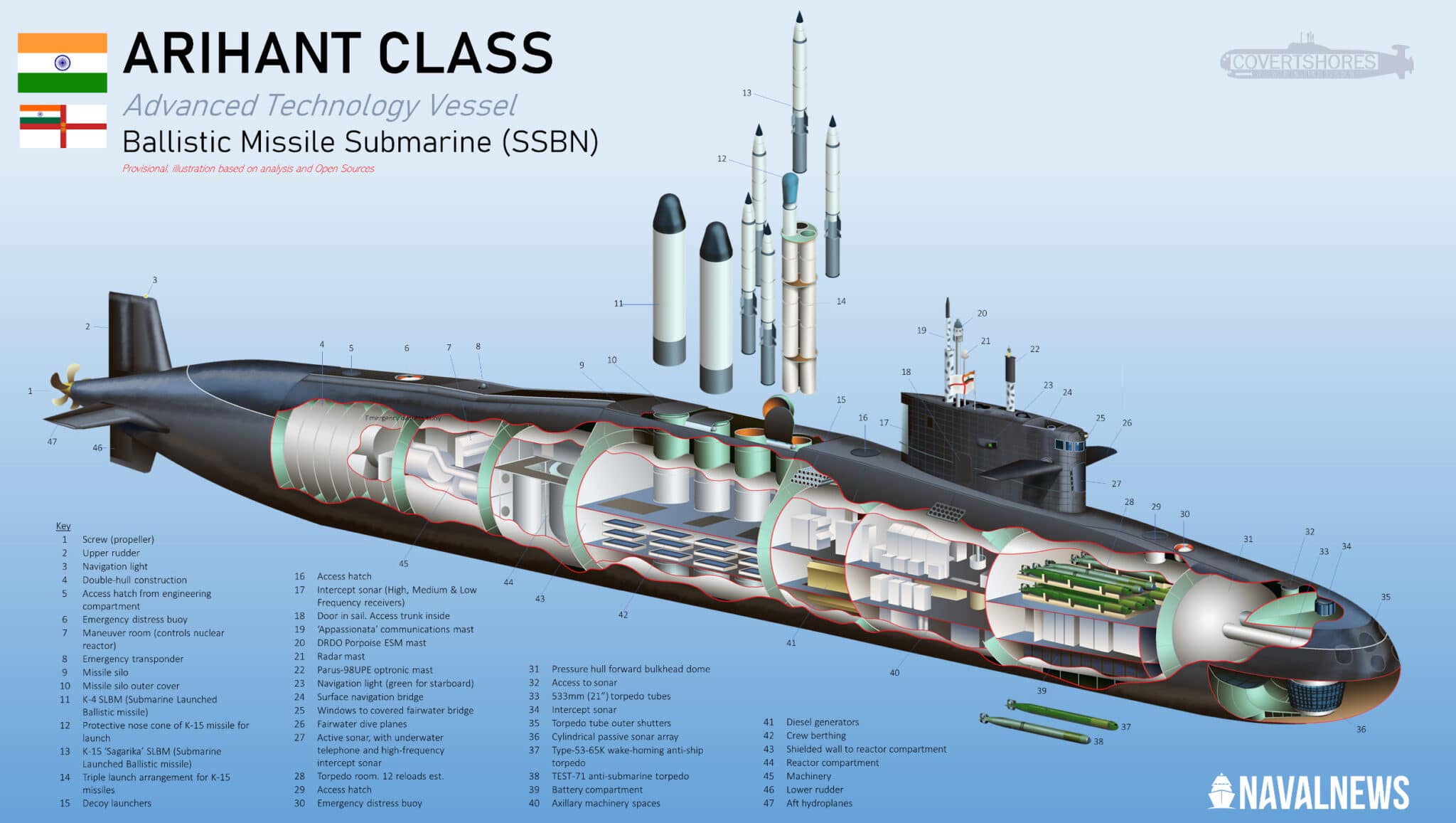 Pic: INS Arihant
The Indian Navy's INS Arihant (Sanskrit: Vanquisher of Enemies), designated S2 Strategic Strike Nuclear Submarine, is the lead ship of the Arihant Class of nuclear-powered ballistic missile submarines. The imposing 6,000-ton vessel was constructed at Visakhapatnam's Ship Building Centre as part of the Advanced Technology Vessel (ATV) project. The Arihant was inaugurated by Prime Minister Manmohan Singh on July 26, 2009, the anniversary of Vijay Diwas (Kargil War Victory Day). She was declared operationally ready on February 23, 2016, commissioned in August 2016, and deployed operationally in 2018.
The vessel is propelled forward by an 83 MW pressurised light-water reactor fueled with enriched uranium. Her crew consists of one hundred officers and sailors. The Arihant submarine is equipped with four vertical launch tubes that can accommodate 12 smaller K-15 missiles (three per launch tube) or four bigger K-4 missiles. The K-4 has a range of 3,500 kilometres (2,200 miles), and trials began in 2014. The Arihant travelled north along the Bay of Bengal coast on December 13, 2014, for extended sea trials. The successful completion of a deterrent patrol by India's first ballistic missile nuclear submarine (SSBN), the INS Arihant, signalled the operationalization of India's nuclear deterrent capability's sea-based leg. From a strategic standpoint, this capability signifies a quantum leap forward in India's drive to develop into an emergent global power capable of building and operating nuclear submarines.
Sagarika Ballistic Missile

Pic: Sagarika Ballistic Missile
The naval trials included the firing of the indigenous Sagarika ballistic missile launched from a submarine. On November 25, 2015, the Arihant successfully test-fired an unarmed Sagarika missile. Submarines were then subjected to additional rigorous sea trials, which concluded in early February 2016.
Sagarika, also known as K-15, is an Indian submarine-launched ballistic missile (SLBM) with a range of 750 kilometres. It was developed for retaliatory nuclear strikes. It is a member of the K Missile family and is included in India's nuclear triad. The underwater missile launcher, dubbed Project 420, was completed in 2001 and was turned over to the Indian Navy for evaluation. The missile launcher is being created in the Gujarat town of Hazira. Sagarika missile integration has begun with India's nuclear-powered Arihant-class submarines. The longer the missile's range, the larger the submarine's operating radius and the greater its capability to deliver a crippling second strike while increasing its invulnerability to detection and counter attack.
Advertisement
INS Kalvari

Pic: INS Kalvari
The INS Kalvari (S21) is the first of the Indian Navy's six indigenous Scorpene-Class submarines. It is a diesel-electric attack submarine designed by DCNS (French naval defence and energy company) and built in Mumbai by Mazagon Dock Limited. She has a 50-day sea endurance. Eight officers and 35 sailors make up her crew. The underwater destroyer takes its name from the Indian Navy's INS Kalvari (S23), which served from 1967 to 1996. Kalvari is the Malayalam word for tiger shark, an Indian Ocean deep-sea predator. The name evokes images of dexterity, strength, and predatory prowess. The motto of the ship is 'Ever Onward,' which embodies the submarine's zeal and indomitable spirit. This submarine is capable of covering a distance of 6,500 nautical miles. Torpedoes, missiles, and mines comprise its lethal arsenal.
INS Shishumar
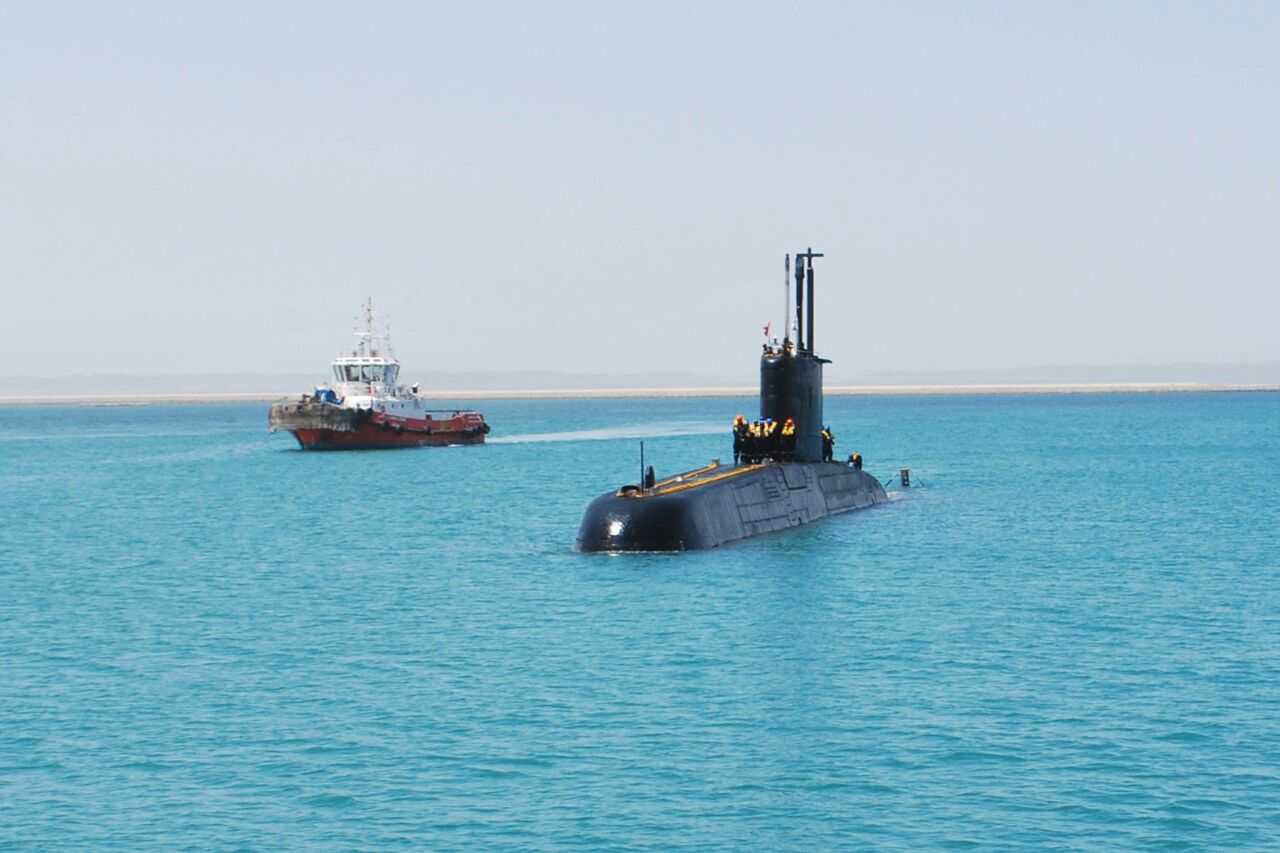 Pic: Shishumar-class atack submarines
The Shishumar-Class attack submarines are currently in service with the Indian Navy. These submarines are an Indian variant of the German yard Howaldtswerke Deutsche Werft's (HDW) Type 209 submarines. They are internally designated Type 1500. The first two vessels were constructed in Kiel by HDW, while the remainder were constructed in Mumbai by Mazagon Dock Limited under a technology transfer agreement.
Between 1986 and 1994, the submarines were commissioned. When surfaced, these submarines have a displacement of 1,660 tonnes, a top speed of 22 knots (41 kilometres per hour), and a crew of 40, including eight officers.
INS Shindhughosh
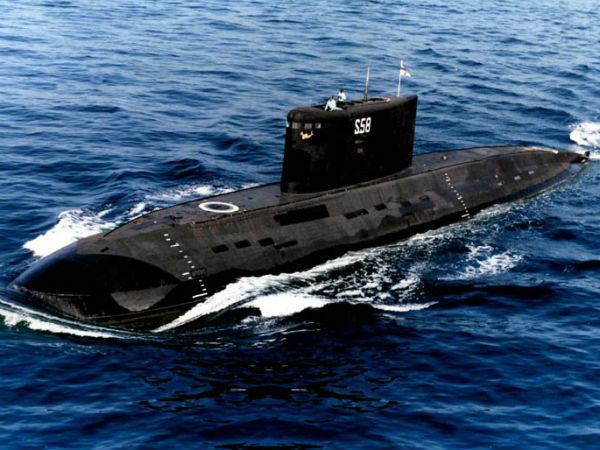
Pic: INS Shindughosh
The Shindhughosh-Class submarines are diesel-electric submarines of the Kilo class that are currently in service with the Indian Navy. The submarines are 3,000 tonnes in weight, have a maximum diving depth of 300 metres, and can reach a top speed of 18 knots. They have a sea endurance of 45 days with a crew of 53.
Keeping the crew motivated onboard entails providing them with fresh meals. In compared to surface ships, cooking takes place in a small galley (kitchen). Navy cooks onboard bear a great deal of duty – the meals they prepare, vegetarian or not, must be healthful and delectable. Everyone onboard consumes the same cuisine - there is no distinction between officers and crew. Being a submariner is a perilous occupation. A buildup of hydrogen and other gases in the battery pits of submarines has the potential to be fatal. A single spark can ignite an explosion, destroying the boat and its weapons - missiles, torpedoes, and mines. In this subterranean environment, the buzzword is "safety."
INS Satavahana

Pic: Submarine School of Indian Navy
INS Satavahana, commissioned in December 1974, serves as the Indian Navy's submarine school. This is the training ground for aspiring submariners. This training facility, dubbed the 'Alma Mater of Dolphins,' consists of the Submarine School, the Escape Training School, and the Advanced Underwater Warfare School. The Escape Training School educates submariners how to safely exit a submerged or crippled submarine. Escapes are simulated in the dark during training, and trainees must pass through flooded hatches to prepare for a real-world challenge. They must conquer their fears. It's all about collaboration and trust in the dark depths of the ocean. The Indian Navy's submariners live by three words: duty, honour, and victory. These men do not ride the waves; rather, they bravely sail beneath them. They are the Indian Navy's underwater warriors.
Advertisement