Ten months after SpaceX launch a NASA probe successfully collides with an asteroid.
Tuesday, September 27, 2022 | Chimniii Desk
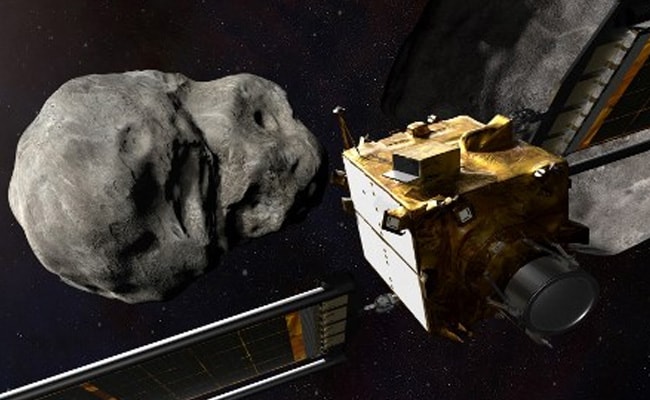
The Double Asteroid Redirect Test (DART) has successfully impacted an asteroid moon ten months after it was launched. The Space Launch Complex 4 (SLC-4) at the Vandenberg Space Force Base is where the Falcon 9 lifted off. The rocket performed well and boosted DART on its way to a pair of asteroids. The goal is to slam into the small asteroid Dimorphos. 3 kilometers per second.
After traveling for ten months and hundreds of millions of kilometers through space, the spacecraft crashed into a target about 160 meters wide just 17 meters away from a perfect bulls eye. NASA and dozens of other groups will now attempt to glean from ground and space telescopes the results of the successful impact, which could be a major leap forward for the field of planetary defense. The main goal of planetary defense is to protect humanity's home planet from asteroids, a threat that has caused mass extinction events throughout the history of life on Earth. DART is the first attempt to test and verify what would seem to be the easiest and most obvious method of redirecting asteroids: knocking them off course with the spacecraft itself.
Advertisement
Advertisement
Testing that assumption is essential because planetary science and the behavior of things in microgravity have a tendency to defy expectations. DART Lead Investigator Andy Chang came up with the idea of hitting a tiny asteroid moon of a much larger parent asteroid. The small risk of accidentally redirecting the target towards Earth would be mitigated by hitting an asteroid moon, which would make it much easier to observe from tens of millions of kilometers away. The results of hitting the right asteroid moon would be much easier to see than a change in the moon's parent asteroid. It's very difficult to scout the objects without actually visiting them because of the spectrographic readings that tell scientists the broad strokes of an asteroid's composition and other telescope images that can make out the rough shape. There are only a few asteroids in our solar system.
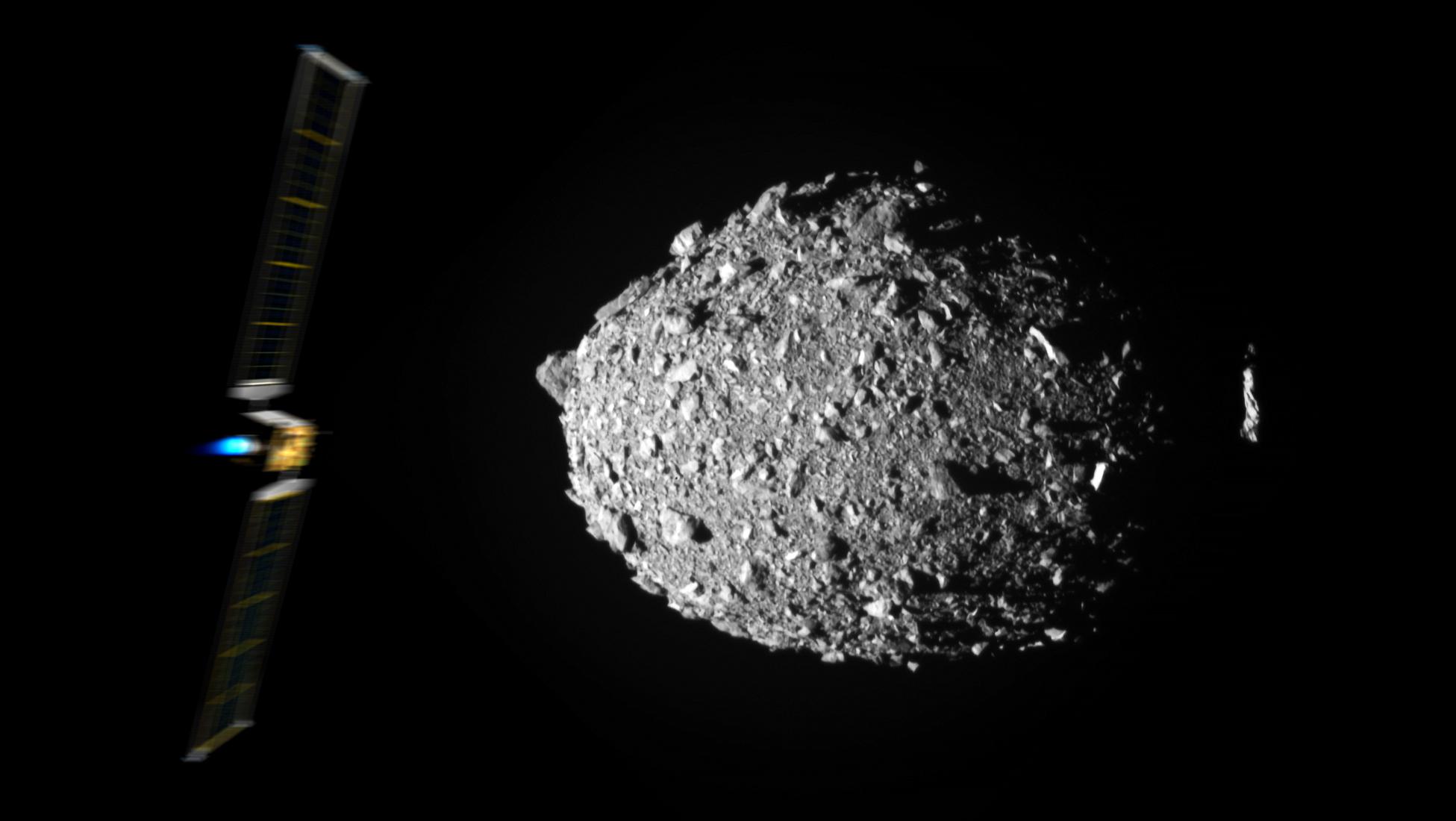
It is difficult to predict what a spaceship will do to a target asteroid without knowing what the asteroid is like. Most asteroids appear to have a looser surface, which would be worse at momentum transfer than a boulder or relatively solid surface of rock. As DART rapidly approached and revealed more detailed views of the surface of Didymos and Dimorphos in its final minutes, Chang was surprised to see how rough and boulder-strewn the surface of both asteroids were. After the impact, many scientists were surprised to see a massive cloud of dust ejected from Dimorphos. The fun has only just begun on the ground as scientists attempt to solve that riddle and begin searching for changes in Dimorphos. Data will soon arrive from even larger and more prestigious observatories, including NASA's space-based Hubble and Webb Space Telescopes.
Advertisement

Advertisement
Italian companion cubesat LICIACube, which was deployed shortly before impact, will also downlink images it took up close, potentially offering the most detailed view of the impact for years. The European Space Agency is working on a project called Hera that will attempt to enter the atmosphere around Didymos and Dimorphos as early as late in the 20th century to examine the aftermath of DART's last stand. If DART succeeds in redirecting an asteroid, it is possible that a new global project and fleet of spaceships will be ready to protect Earth if the need ever arises. With a little luck and a small amount of government funding, humanity may soon be able to eradicate one of the most notorious sources of mass extinction.
Advertisement