SpaceX: Second-Generation Starlink Satellites Will Be Deployed by Both Falcon 9 and Starship
Although SpaceX is still awaiting FCC approval, the modification promises to hasten the deployment of the second-generation Starlink satellites.

Monday, August 22, 2022 | Chimniii Desk
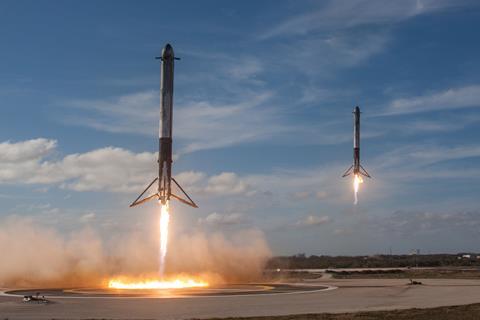
SpaceX is getting ready to launch its second-generation Starlink satellite broadband network using both Falcon 9 rockets and its forthcoming Starship vessel.
In a regulatory file with the FCC on Friday, the business revealed the modification. SpaceX claims the strategy should "significantly accelerate" the rollout of the second-generation Starlink system, which will include close to 30,000 orbiting satellites.
"For its Gen2 constellation, SpaceX intends to launch satellites first into its three 500-kilometer (orbital) shells, then into its lower-altitude shells. More Americans will access high-quality broadband faster as a result "According to the company's filing.
Advertisement

Advertisement
Initially, SpaceX intended to place second-generation Starlink satellites using its Starship vessel. The spacecraft has a maximum capacity of 400 satellites per launch, which is far more than the 60 satellites that a typical Falcon 9 rocket can place into orbit.
Later this year, SpaceX is still planning to launch Starship on a full-scale orbital test mission. Before starting the orbital test flight, the business must still put dozens of environmental mitigations into place. SpaceX informs the FCC that it can start launching second-generation Starlink satellites with current Falcon 9 rockets in the interim.
For the avoidance of doubt, the firm stated that, despite its plans to use both of its fleet's rockets to hasten deployment, SpaceX "remains dedicated to deploying all of its satellites—whether from Starship or from Falcon 9—into orbits outlined in Configuration 1". This arrangement, which SpaceX approved in January, calls for distributing the second-generation Starlink satellites among nine different orbits.
Advertisement
Advertisement
The actual constructions of the satellites will be adjusted to fit the physical dimensions of the rockets on which they will be launched, according to SpaceX, even though they will theoretically be identical on both launchers.
The second-generation Starlink satellites' high-speed internet will function with already-installed consumer Starlink dishes on the ground. Therefore, its implementation could aid in addressing the congestion issues some Starlink users are starting to experience. However, the business is still awaiting regulatory approval from the FCC before deploying the second-generation Starlink network at a time when competitors are either against or have concerns about the idea.
In fact, a significant portion of SpaceX's filing attempts to reassure the FCC that its network of roughly 30,000 satellites won't present an orbital risk or cause radio interference. Only 4,400 satellites are intended to be used in the first generation Starlink network. There are currently around 2,800 of them satellites in use.
Advertisement